Economic and Market Environment
Fourth Quarter 2026
The Economic & Market Environment
Interest Rates & The Economy
Interest rates have been rising in 2026.
- The Fed raised interest rates for the first time in three years.
- The 10-year Treasury yield has reached a two-decade high.
- Global bond yields are rising, as well.
Inflation, fiscal, and geopolitical pressures remain elevated.
-
Affordability is a key issue for many.
U.S. growth remains resilient.
- AI-related investment and higher-income consumer spending continue to support the economy.
- This is particularly favorable compared to other nations.
Stocks & Bonds
Equities are doing well due to strong corporate earnings, but higher interest rates are now beginning to have an impact on the stock market.
- Elevated valuations and uncertainty around AI growth remain key risks.
Long-term yields have risen sharply, putting pressure on bond prices.
- Shorter maturities and higher income have helped limit the impact on portfolios.
- Interest rates are not high enough to cause a recession.
Political and geopolitical uncertainty remains elevated.
- Midterm elections, gas prices, and Iran-related conflicts remain potential sources of volatility.
Interest Rates Have Been Rising in 2026
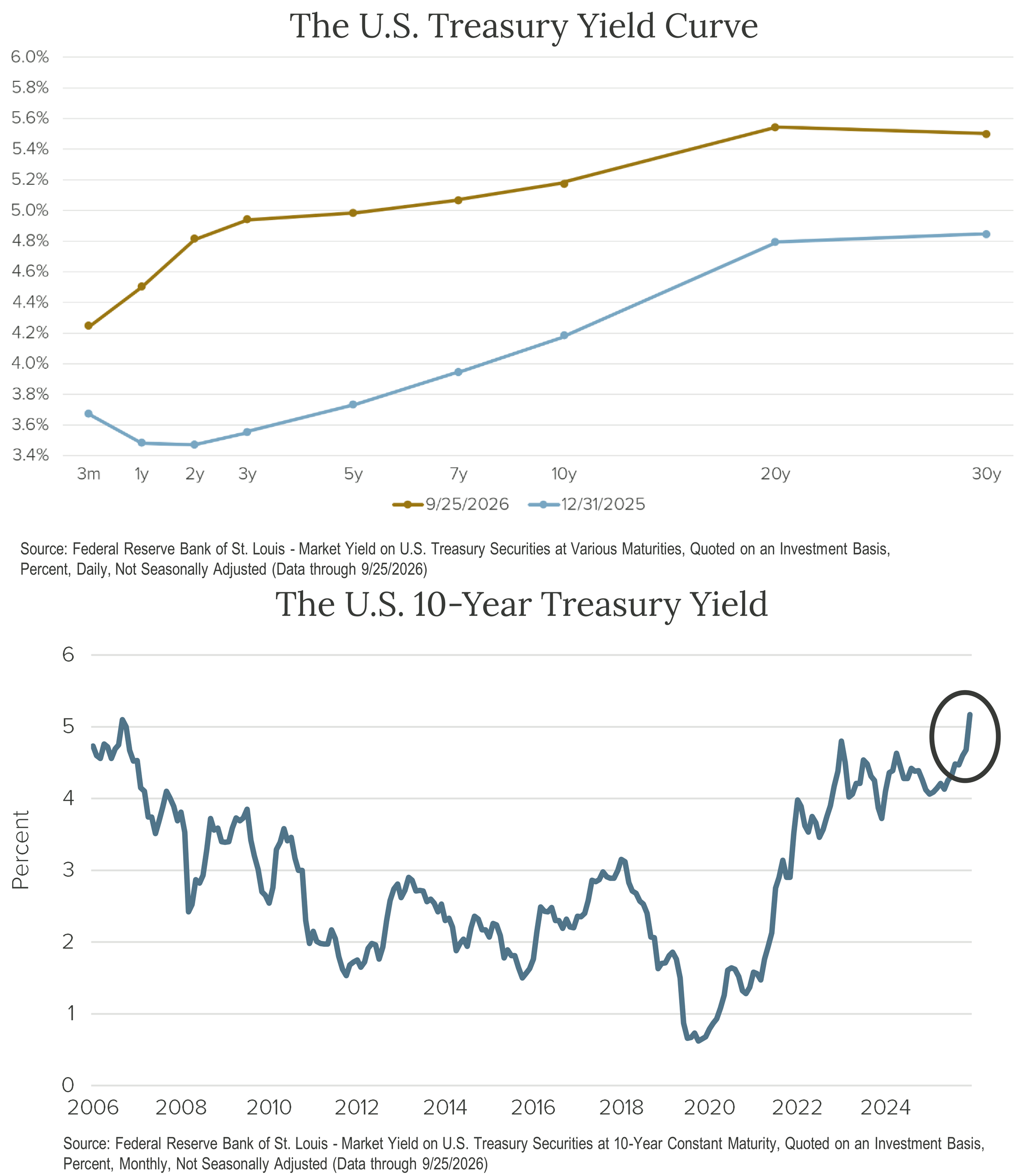
- The chart on top shows Treasury yields at varying maturities. Yields are currently elevated, particularly for longer-dated securities.
- The 10-Year U.S. Treasury yield is the most important, and it has reached a two-decade high.
Why Interest Rates Are Rising

Persistent Inflation
Inflation remains above the Federal Reserve’s target of 2%.

Heavy Demand for Capital
AI-related investment is driving substantial corporate bond issuance, increasing competition for capital across fixed income markets.

Fiscal Pressure
Large federal deficits and growing financing needs are increasing Treasury supply and contributing to concerns about the long-term fiscal outlook.
Persistent Inflation
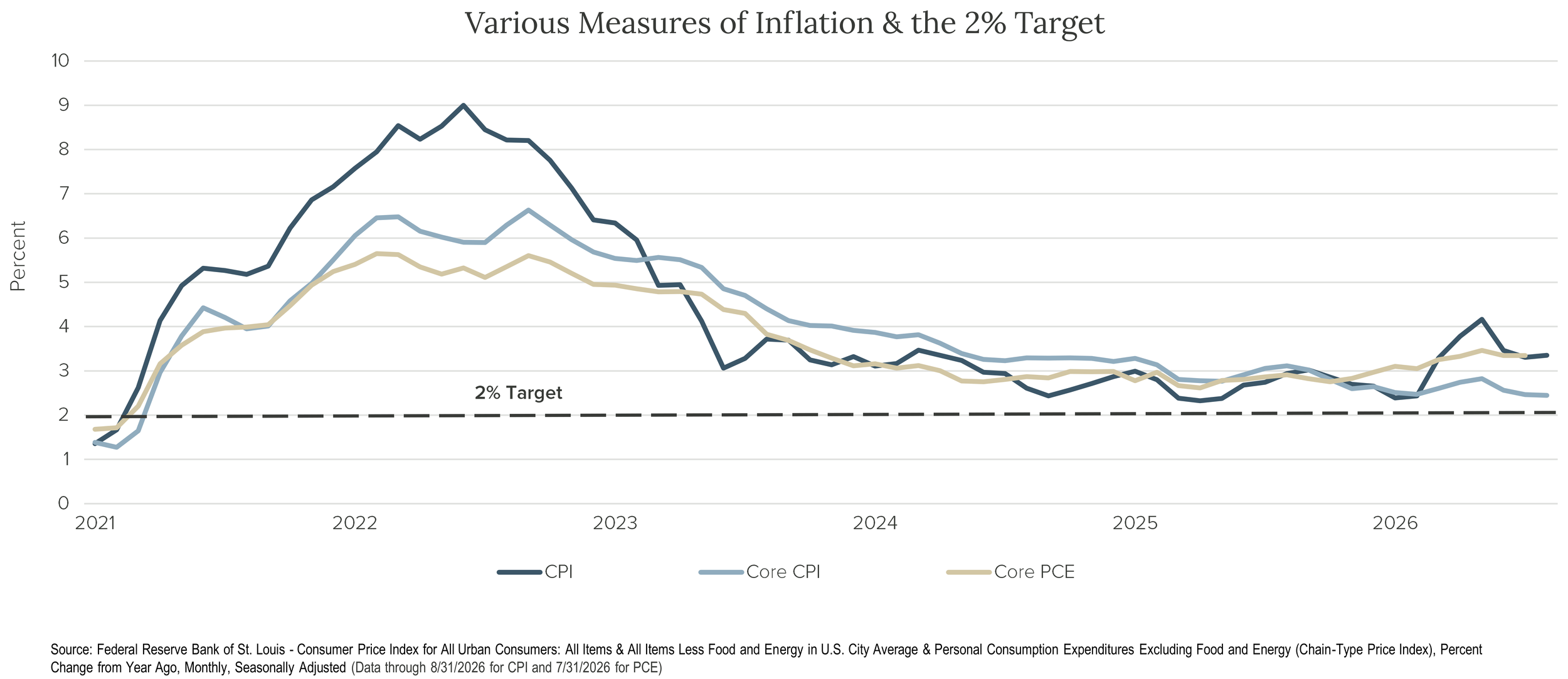
- Inflation has improved from peak levels, but it has been above the Fed target for over five years.
Heavy Demand for Capital
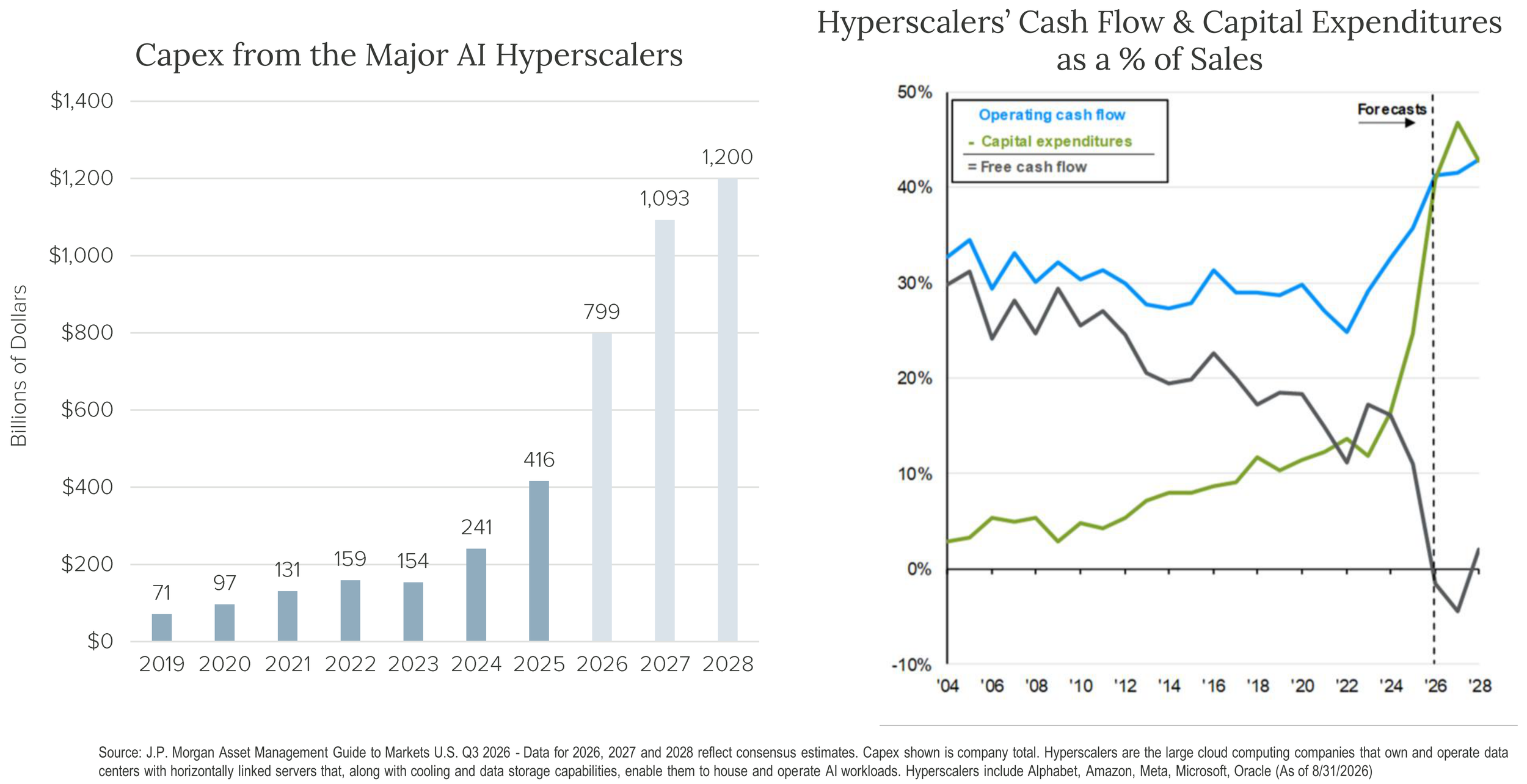
- Capital expenditures are consuming an increasingly large share of sales, approaching operating cash flow for the major hyperscalers.
- Free cash flow has materially compressed as investment has ramped, highlighting the extraordinary funding requirements associated with AI infrastructure buildout.
Fiscal Pressure
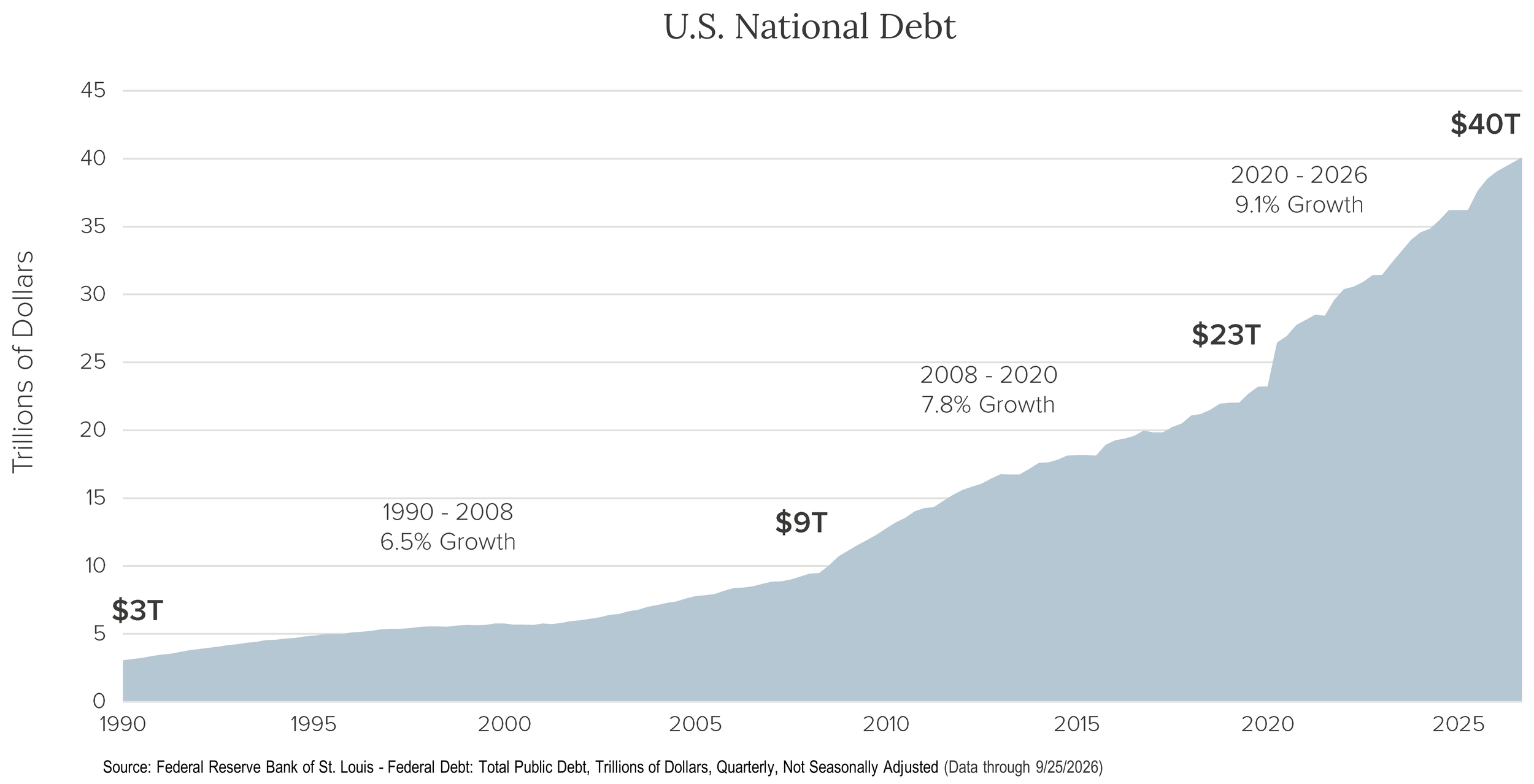
- U.S. national debt has accelerated sharply, rising from approximately $23 trillion in 2020 to $40 trillion in 2026.
- The growing federal debt burden could put upward pressure on interest rates, increase financing costs, and constrain future fiscal policy.
Stocks Have Been Volatile in 2026
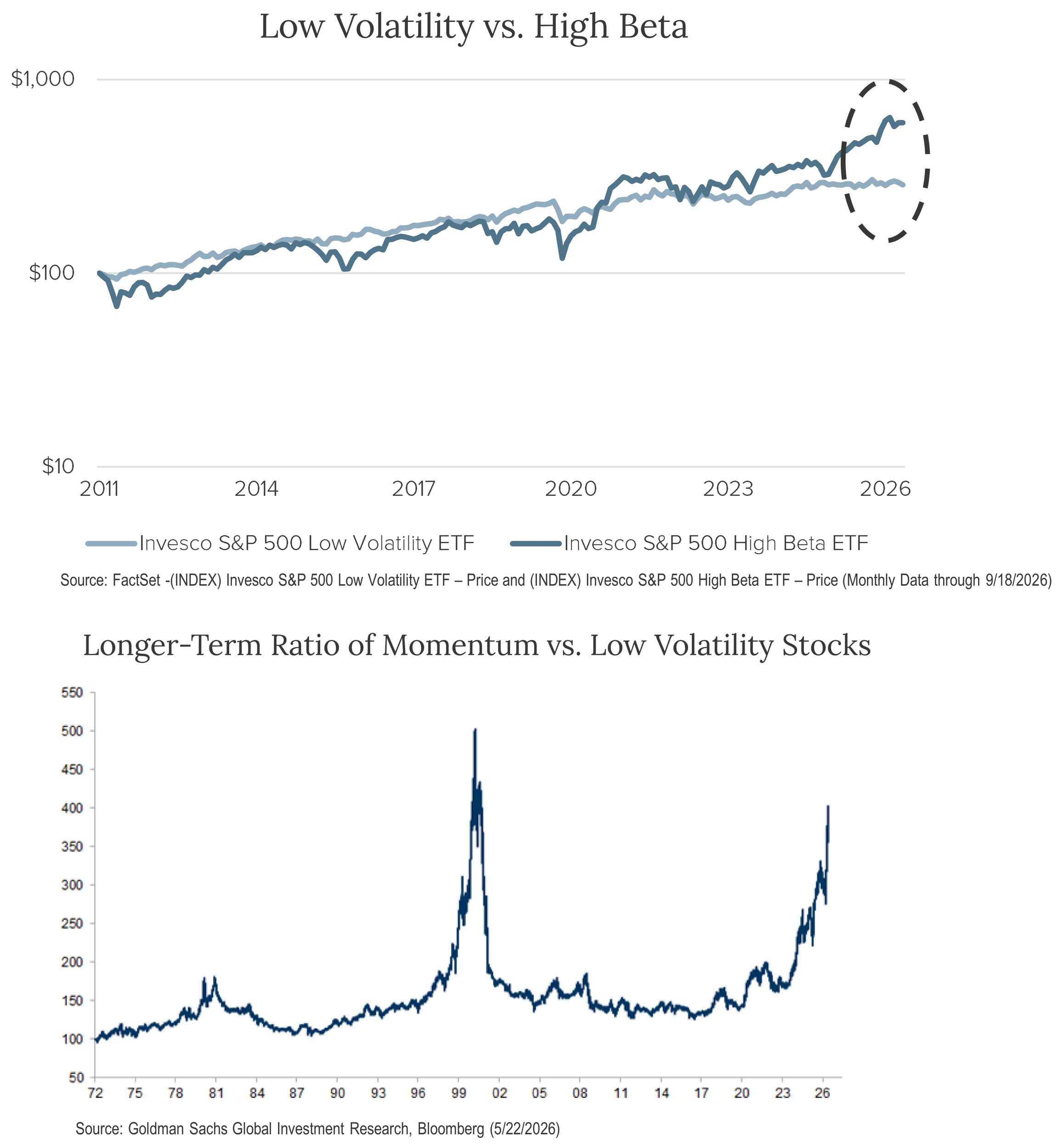

- Investors have been favoring higher-risk, higher-growth areas of the market.
- High beta stocks have materially outpaced lower volatility stocks.
- The ratio of the S&P 500 momentum stocks vs. low volatility stocks is nearing the 1999 peak.
Why Stocks Are Exhibiting Volatility

Higher Interest Rates
Higher rates increase the discount rate applied to future earnings and can pressure equity valuations.

AI Slowdown Fears
Concerns that AI investment or earnings growth could moderate are creating volatility among the market’s largest technology leaders.

Elevated Valuations
High starting valuations leave less room for disappointment and can amplify market reactions to weaker-than-expected results.
Higher Interest Rates
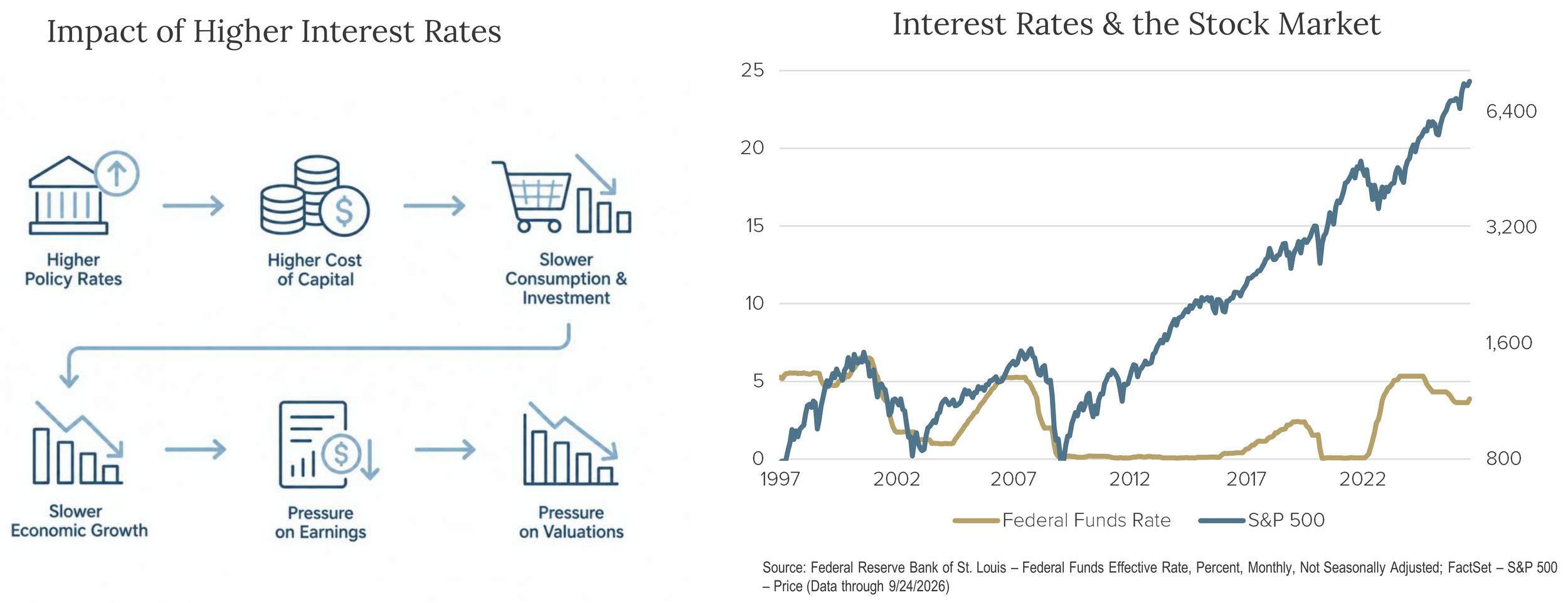
- The key question is whether higher rates ultimately constrain growth and earnings enough to pressure valuations.
AI Slowdown Fears

- The SOX Index was up over 100% at one point in the second quarter, but recent pressure reflects questions around the durability of AI capital spending, semiconductor capacity, competition, and financing.
- Market leadership has broadened beyond the most crowded AI-related trades.
Elevated Valuations
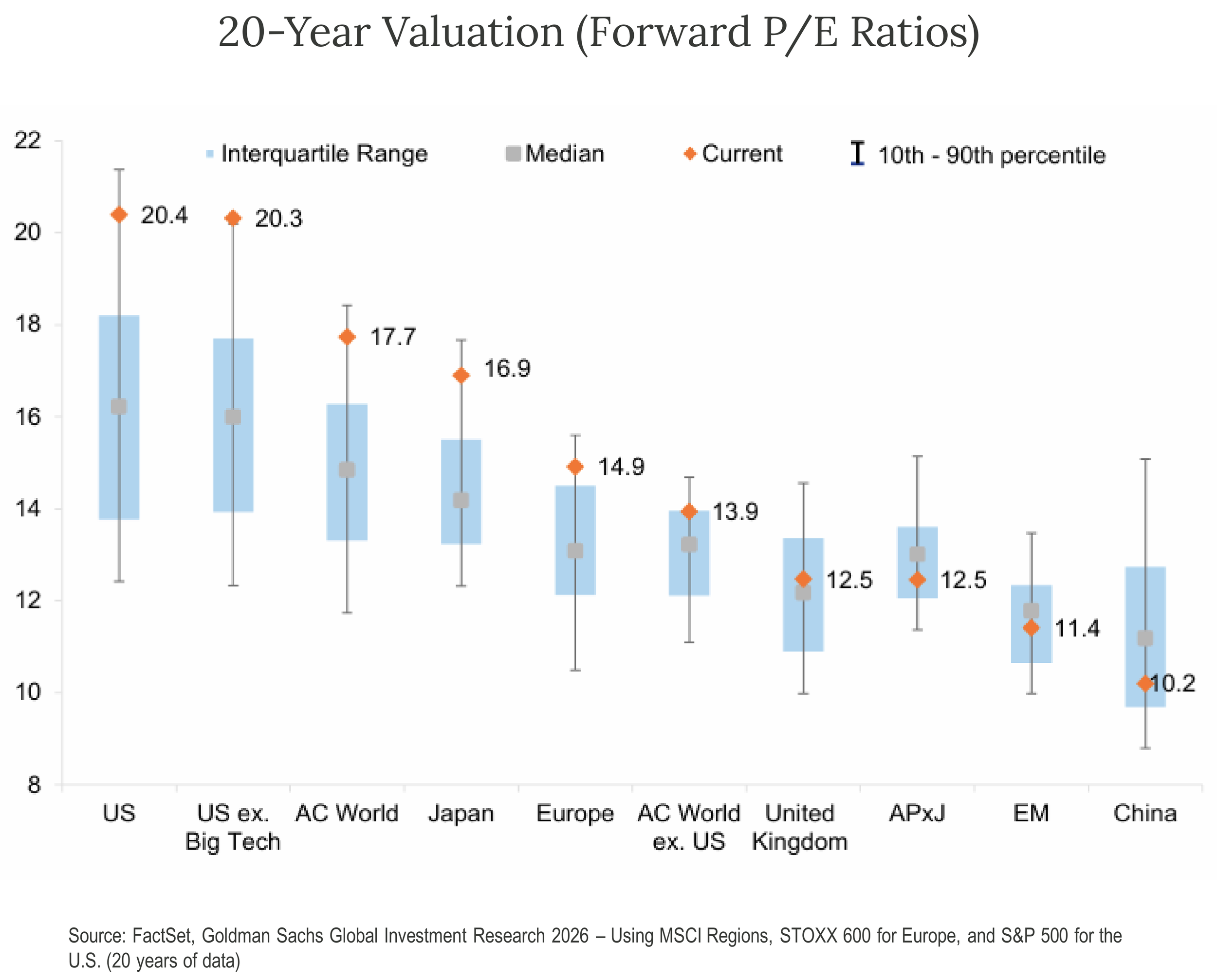
- U.S. equities remain the most expensive major market, even excluding Big Tech, with the S&P 500 trading near the upper end of its 20 -year valuation range.
- Stronger growth, productivity, and investment can help explain why U.S. equities command a higher valuation multiple than many international markets.
- Value-oriented stocks offer a better valuation profile and, as a result, less risk.
U.S. GDP Growth Remains Ahead of Most Developed Economies
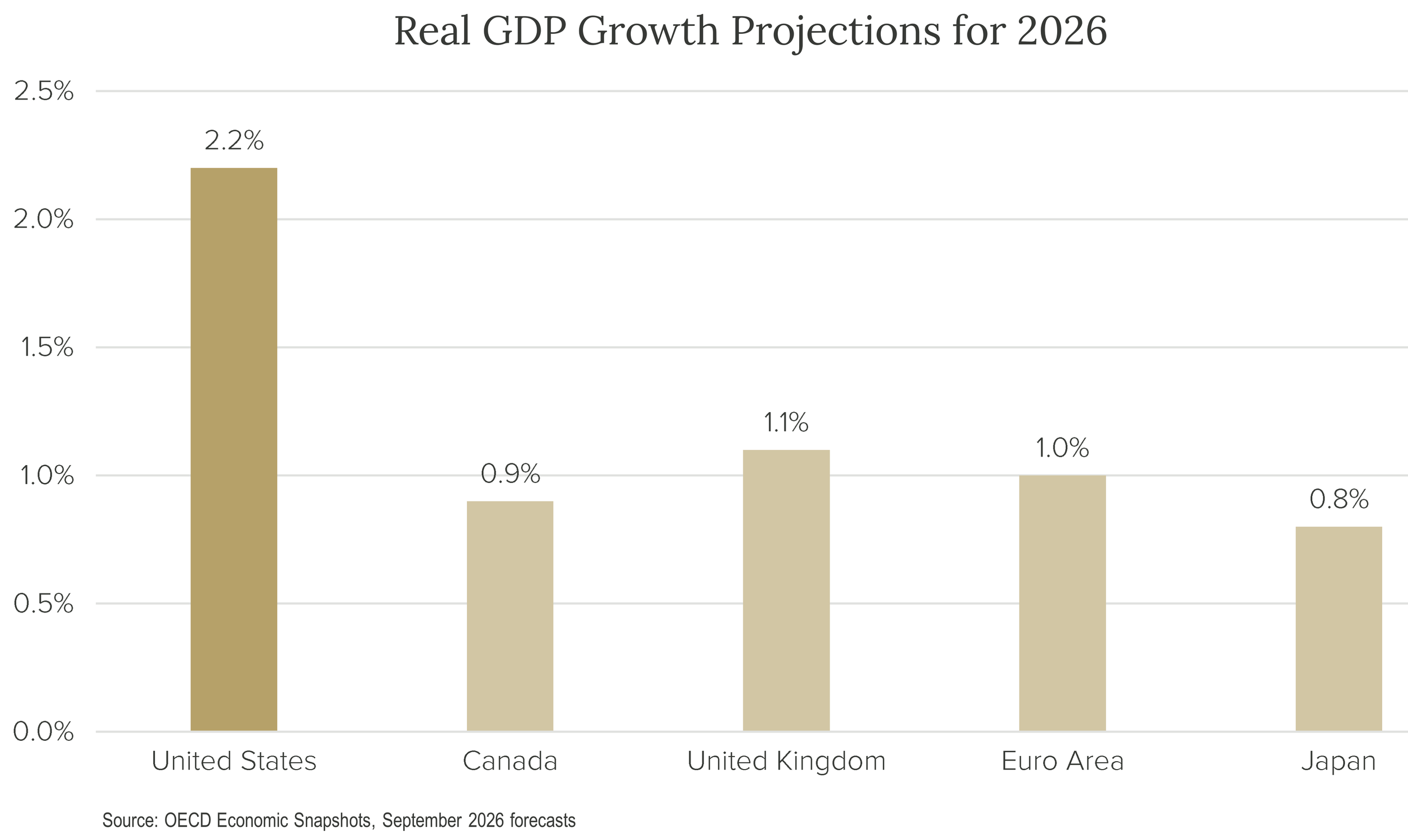
- U.S. economic growth is expected to remain stronger than most major developed-market peers, supporting a comparatively favorable backdrop for corporate revenues and earnings.
Notable Contributors to U.S. Economic Growth

AI-Related Capex
Large-scale spending on data centers, computing infrastructure, software, and related technologies is supporting business investment.

The Wealth Effect
Higher-income households continue to provide meaningful support to consumption, even as lower-income consumers face greater pressure.

Labor & Productivity
These remain fundamental long-run drivers, but labor-force growth is becoming less supportive.
Capital Spending Components
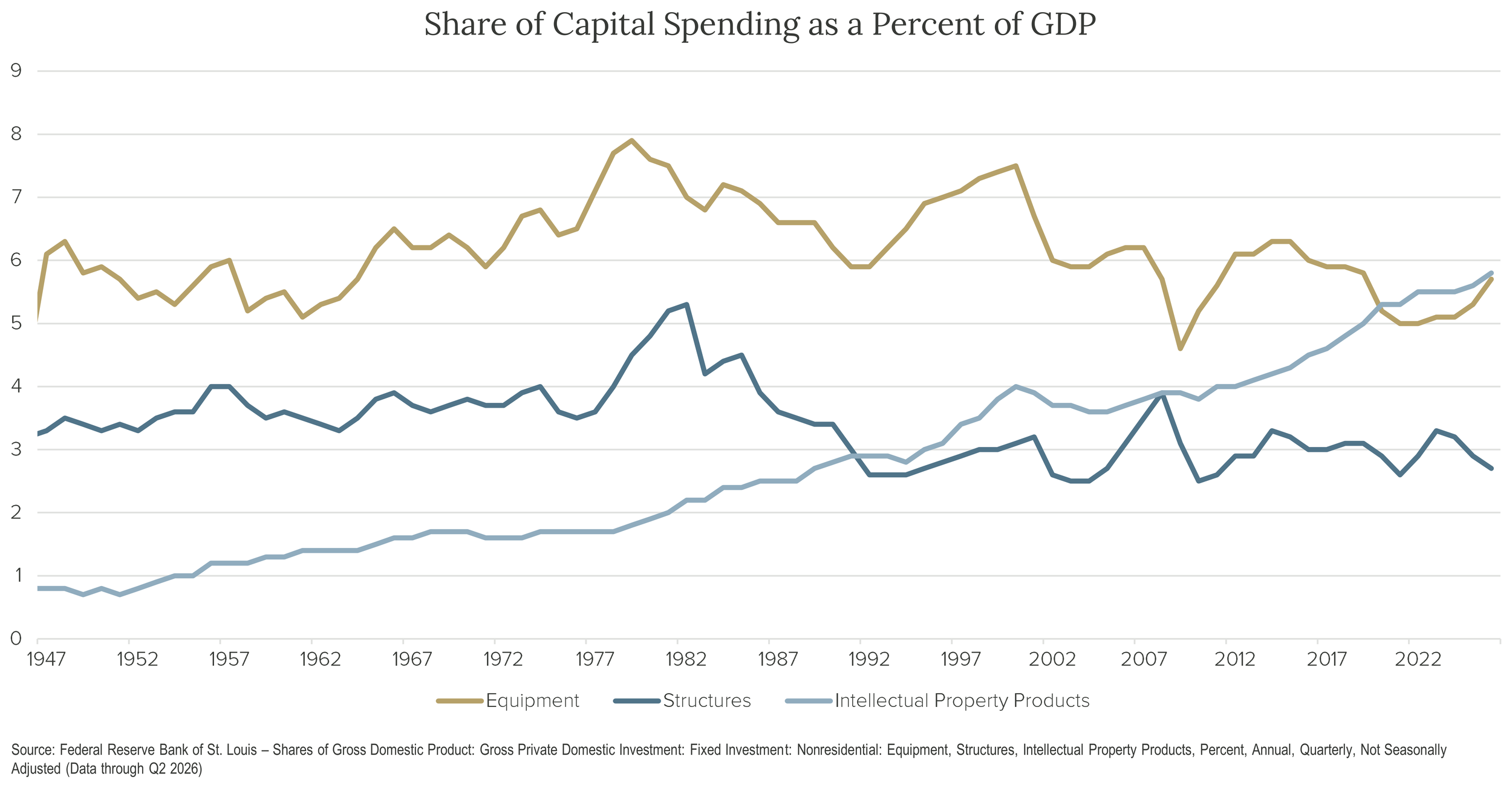
- The composition of capital spending has become increasingly intangible, or knowledge-and-technology-intensive
The Consumer is Increasingly Bifurcated
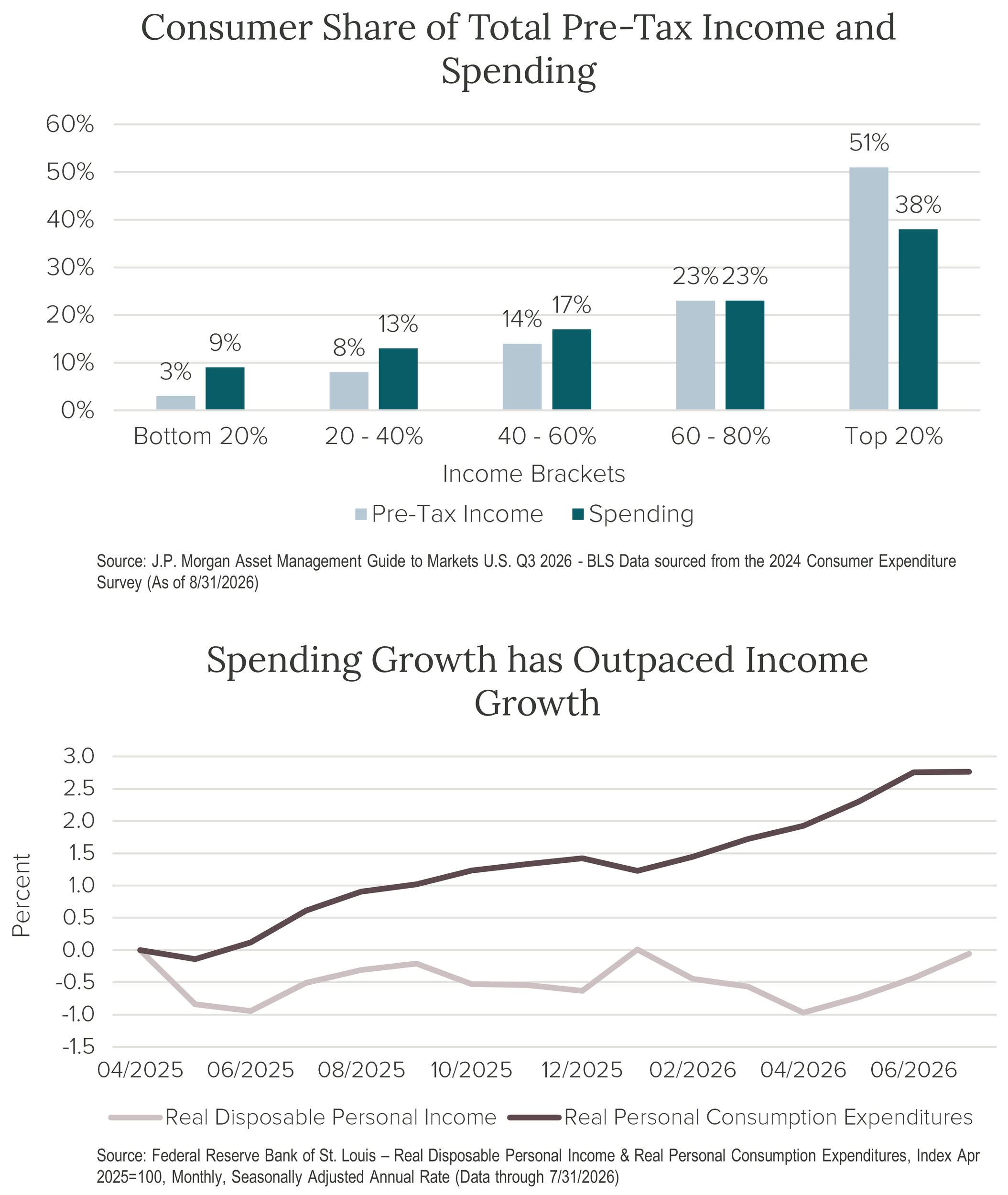

- The K-shaped economy and wealth effect are driving the economy as higher-income households account for a disproportionate share of income, spending, and wealth.
The Wealth Effect

- Wealth has disproportionately accrued to high-net-worth individuals.
Labor & Productivity

- The U.S. labor market is currently characterized by relatively limited hiring and limited firing.
- Lower population and immigration growth could become a more meaningful constraint on labor supply and GDP growth.
Disclosure Statement
Crawford Investment Counsel (“Crawford”) is an independent investment adviser registered under the Investment Advisers Act of 1940, as amended. Registration does not imply a certain level of skill or training. More information about Crawford, including our investment strategies, fees, and objectives, can be found in our Form ADV Part 2 and/or Form CRS, which is available upon request. This material is distributed for informational purposes only. The statements contained herein reflect opinions, estimates an d projections of Crawford as of the date hereof, and are subject to change without notice.
This material is not financial advice or an offer to sell any product. Forecasts, estimates, and certain information contained in this commentary are based upon proprietary research and should not be considered as investment advice or a recommendation of any particular security, strategy or investment product. Any projections herein are provided by Crawford as an indicator of the direction Crawford’s professional staff believes the markets will move, but Crawford makes no representation such projections will come to pass. Crawford makes every effort to ensure the contents have been compiled or derived from sources believed reliable, and contain information and opinions that are accurate and complete; however, Crawford makes no representation or warranty, express or implied, in respect thereof; takes no responsibility for any errors that may be contained herein or omissions; and accepts no liability whatsoever for any loss arising from any use of or reliance on this report or its contents. Crawford reserves the right to modify its current investment strategies and techniques based on changing market dynamics or individual portfolio needs.
Forward-looking statements cannot be guaranteed. This document may contain certain information that constitutes “forward-looking statements” which can be identified by the use of forward-looking terminology such as “may,” “expect,” “will,” “hope,” “forecast,” “intend,” “target,” “believe,” and/or comparable terminology. No assurance, representation, or warranty is made by any person that any of Crawford’s assumptions, expectations, objectives, and/or goals will be achieved. Nothing contained in this document may be relied upon as a guarantee, promise, assurance, or representation as to the future.
Get in touch today.
We welcome the opportunity to learn about your objectives and discuss how Crawford Investment Counsel can help you achieve them.